
Clean Heights Initiative · Community beekeeping
A livelihood idea, rooted in care for nature.
A conversation about caring for the environment led to a practical question: could beekeeping create another way for people to work with the land? Clean Heights purchased hive equipment so the idea could move from discussion to action.
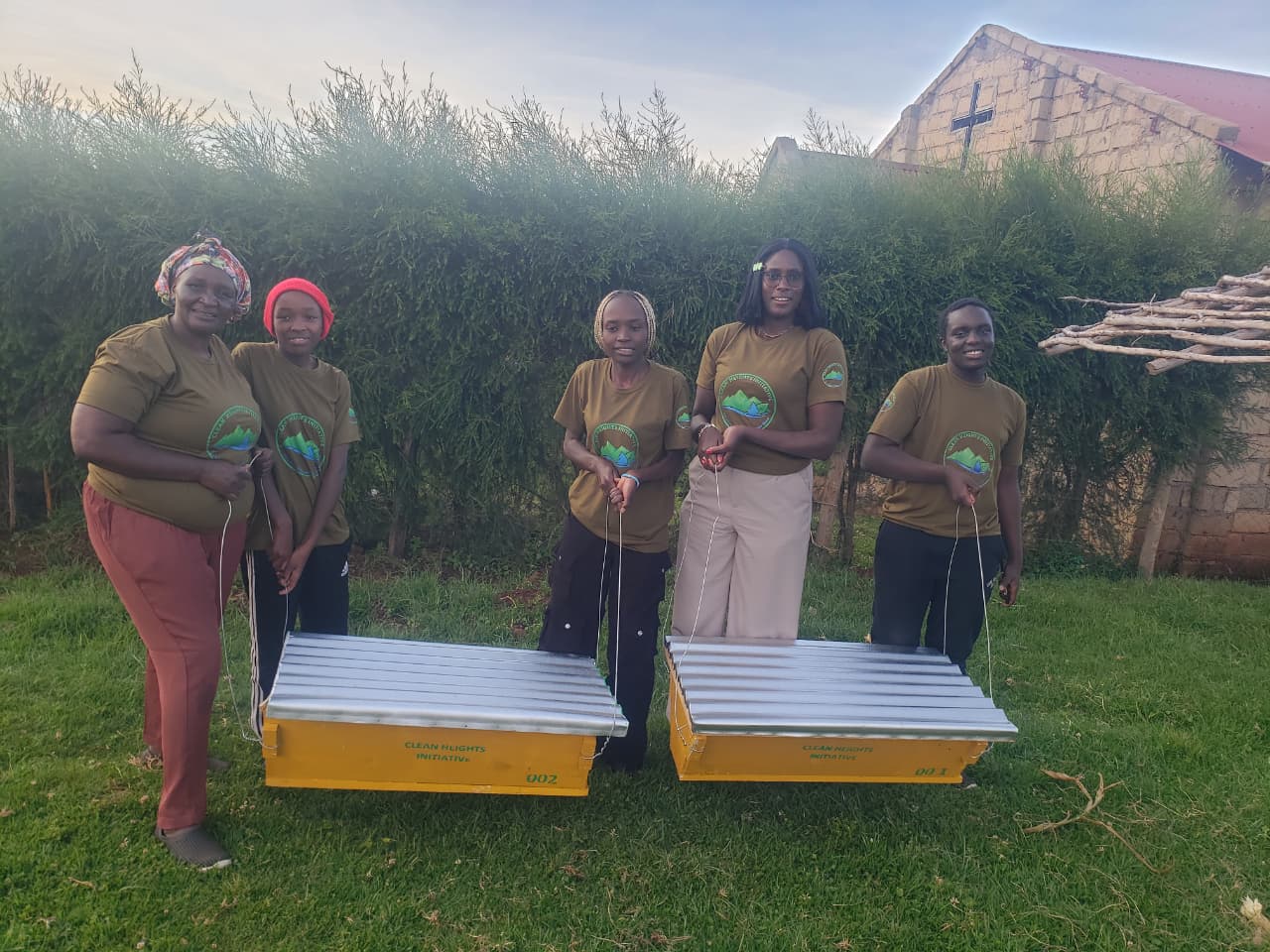
From idea to action
Beekeeping opened a new conversation about caring for land.
Clean Heights Initiative purchased beehives to begin exploring what community beekeeping could look like. The equipment gave the idea a practical starting point and brought the team together to consider how people, pollinators and the surrounding environment might benefit from careful, locally grounded work.
For the community members involved, this is a chance to explore a different relationship with the landscape: learning how beekeeping works, what care it requires and whether it can become a useful part of local environmental action. The work is still developing, and its story will grow through the people who take part and the choices they make together.
Why bees? Bees pollinate plants and help sustain biodiversity. Beekeeping can also support livelihoods when training, suitable conditions and consistent hive care come together. Here, the hives mark the beginning of that exploration; future outcomes should be shared as they are established.
The people behind the effort
A shared idea begins with people willing to try.

A different kind of environmental action
Care for nature can also create room for new livelihoods.
Bees do more than make honey. They pollinate plants and support biodiversity. The Food and Agriculture Organization also describes beekeeping as one potential contribution to forest livelihoods. That wider picture is part of why Clean Heights is exploring this work with the community.